Tag: personal essay

  • Coming Back to Writing

    Coming Back to Writing

    What is this? A second post in a week?!

    My first three entries into this so called “blog” arrived at a pace of one per year, and each time I truly believed I had cracked the code—that this would be the moment I magically leveled into a consistent writer. Of course, that never happened, but the desire to try again never went away. In fact, I’ve been returning to writing for far longer than these posts give me credit for.

    So why do I keep returning, even after repeatedly proving how difficult consistency is for me?

    Thinking about that question, I remembered a class I took in middle school—my 7th grade Spanish class. Shout out to Ms. Santiago and La Libre, my school in Puerto Rico. In that class, we had an assignment where we had to create a book: a short story, poems, or any original written work we wanted. The point of the assignment wasn’t just writing, but understanding the publishing and editorial process by writing an author bio, thinking about the role of a publishing house, designing a cover, and more.

    I had completely forgotten about the assignment until two weeks before it was due. My cousin, who was in the same class and had the same assignment, reminded me by casually asking how it was going. I immediately felt panic. We had been given two months to work on it, and I hadn’t done anything. Now I had to cram everything into two weeks. I worked hard, got a lot of help from my mom and her best friend, and somehow managed to turn something in.

    Of course, I had to title it, “Two weeks ago, when I remembered this assignment was due, an author was born!” I was trying to be funny, to make light of a stressful situation, but I didn’t realize then how true that would turn out to be. I learned so much in that class. No, I don’t remember a single thing about anything we read, but it’s the class that made me fall in love with reading and writing. Without it, I don’t think I would’ve ever felt the desire to pick up a book or write anything beyond school work—or at the very least, it would’ve taken me much longer to find my way there.

    So if I love writing so much, why don’t I do it more often? And what is consistency, anyway? What makes someone a writer?

    I’ve been beating myself over these questions for years. Ever since that assignment, I’ve thought of myself as a writer—but can a clock that doesn’t work still claim to tell the time? It might look like a clock, but it doesn’t behave like one. Is being a clock an identity or a function? And can I really be a writer with long stretches of zero writing?

    I once had dreams of writing novels, children’s books, poetry, and I believed that these were the things—producing finished work, publishing consistently—that truly made someone a writer. Writing was a function, a kind of factory line: churn out words, then churn out more. Over time, I had to accept that I couldn’t fit the version of a writer I had invented for myself. I couldn’t write as consistently as I wanted to, and I started to wonder if maybe I wasn’t a writer after all.

    But still I keep returning. I keep creating. Whether it’s music, literature, or photography, I’m drawn back to the act of expression. Music lets me reach feelings that language can’t touch. Photography opens a portal to moments in time that words would only blur. Writing sits between the abstract and the concrete, forcing me to slow down, to organize, to make sense of ideas I don’t fully understand yet.

    After this realization, the question quickly shifted from “Am I consistent enough to be a writer?” and became “Why do I keep coming back?” And that question was much easier to answer because the answer was quite simple: writers write—but more importantly, they return to writing. Even after long gaps. Even without an audience. Even without proof that it will stick this time.

    A broken clock may not keep perfect time, but it’s still the first place you check.

    It’s taken me a long time to get to this point, and I still might not write as consistently as I’d like. But that’s exactly why I keep returning. Because at the heart of it all, I love writing. Because this is who I am and this is what I do.

    I am a writer.

  • When Fear Finds You Anyway: A Year of Anger and Hope in Minneapolis

    When Fear Finds You Anyway: A Year of Anger and Hope in Minneapolis

    The Life We Were Building

    Yesterday marked a year since my wife and I took just a few of our belongings, our pets, our fears, our grief, packed them all into our RAV4, and left Texas in search of a better and safer life. That was 12 months ago, but just a few weeks prior to that we were working hard to save money and improve our credit to afford our first home together in Texas. It was supposed to be our forever home.

    We were very excited about the house. We designed it ourselves and we made sure that it was both in a safe neighborhood and had everything we wanted for our future family. A home meant to grow with us. Space for work, family and the life we imagined ahead.

    We drove by it often, seeing the different stages of construction. I loved walking through the site to imagine the floor plan realized in front of me. With each step I saw visions of how our lives would look there, how our family would take shape inside that lot, I could look around and see the neighborhood we would soon get to call ours… and then the election happened.

    Election Night

    I remember election night vividly. I remember the disappointment I felt, the sadness, anger, and frustration fusing together in my mind, but most of all I remember the fear and dread of what was to come. The fear moved throughout my body, painfully tensing and contracting muscles in its path, but never finding the right place to settle. It was as clear to me then as it is now that this was not going to be like the last term and that things were going to get ugly and violent very fast.

    Life has never felt the same since Trump’s first term. Having grown up in Puerto Rico, I was not very knowledgeable about American politics until I moved to the mainland United States. But I definitely noticed the shift once he took office. People I thought I knew were now fully supporting a man who loved to embolden the worst parts of our society and promote division and violence. Four years later, Trump campaigned again and this time with openly authoritarian language. It was plain as day.

    Instantly our forever home no longer felt safe. The visions of the future I had seen? They were just daydreams and now I had to wake up and face the music. Did I feel comfortable and safe raising a family in a state that predominantly voted for Trump? That night didn’t just announce who the next president of the United States would be. It also erased the future I could almost touch—one vote count at a time.

    The “Sudden Move”

    People must have thought that we were crazy for leaving everything we were building and all of our friends and family behind. From the outside, it must have looked like an over-dramatic decision made on a whim. In reality, my wife and I were falling apart with all the research, spreadsheets, heartache and fear from a decision we would never be considering otherwise.

    I had moved throughout the country many times and had lived in many different states, but Texas is where I found my partner, the person I wanted to spend the rest of my life with. Texas felt like home for us. We had family nearby, friends, community. We didn’t want to leave.

    It’s not official yet. This is all research just in case we decide to leave, we said to each other as we were getting flight tickets to see apartments in Minnesota. The decision had already been made, but we weren’t ready to admit it to ourselves. We couldn’t face the fact that our future was going to look very different from what we had imagined.

    Why Minnesota?

    We had flirted with the idea of maybe leaving Texas some time in the far and distant future, and Minnesota was one of those options. We knew very little about the state, but liked what we knew. A state known for good healthcare, access to nature, and mostly left-leaning? That felt like a great start.

    We quickly zeroed in on Minneapolis as a possible destination and began researching. We saw that the city was definitely not perfect. It had its fair share of issues, but it was definitely trying to be better. That was a breath of fresh air. Texas felt set in its ways, with not much change on the horizon. Trying to be better is exactly what I was looking for. A commitment to improving instead of maintaining the status quo. I could not pretend that everything was fine, but trying to be better, that I could get behind.

    We flew to Minneapolis to look at a few apartments in person, and quickly fell in love with the city. The air felt fresher, lighter, less politically oppressive. We felt like the city aligned better with our values. It felt like a safe place to camp and wait out the political storm, and if we dared to think that far ahead, maybe even stay long-term.

    Building a New Life from Scratch

    The past year has been hard. We moved in the middle of winter and were not used to the harsh cold weather that’s commonplace up north. Everything was new. Some of the stores and restaurants we were used to were not here. This wasn’t much of a hurdle though. The worst part was the loneliness. It’s been hard to make friends in a new place, especially because we didn’t want to leave our old friends in the first place. We missed our families, our friends, our routines. The resentment of feeling forced out of our own lives stuck with us and made it difficult to really want to settle for a while.

    The safety we were looking for came at a cost, but at least it gave us room to breathe.

    And little by little, we started shaping our routine. Things we liked to do, places we liked to go, it all started falling into place over time. We were no longer strangers in a new land, but neighbors in this new community. Making friends hasn’t gotten any easier, but we don’t feel as lonely anymore.

    The most important thing for us was that we felt safe here. The people around us shared our values and our worries, and I knew that if push came to shove, they would have our backs.

    One Year Later: The Present

    What’s happening here

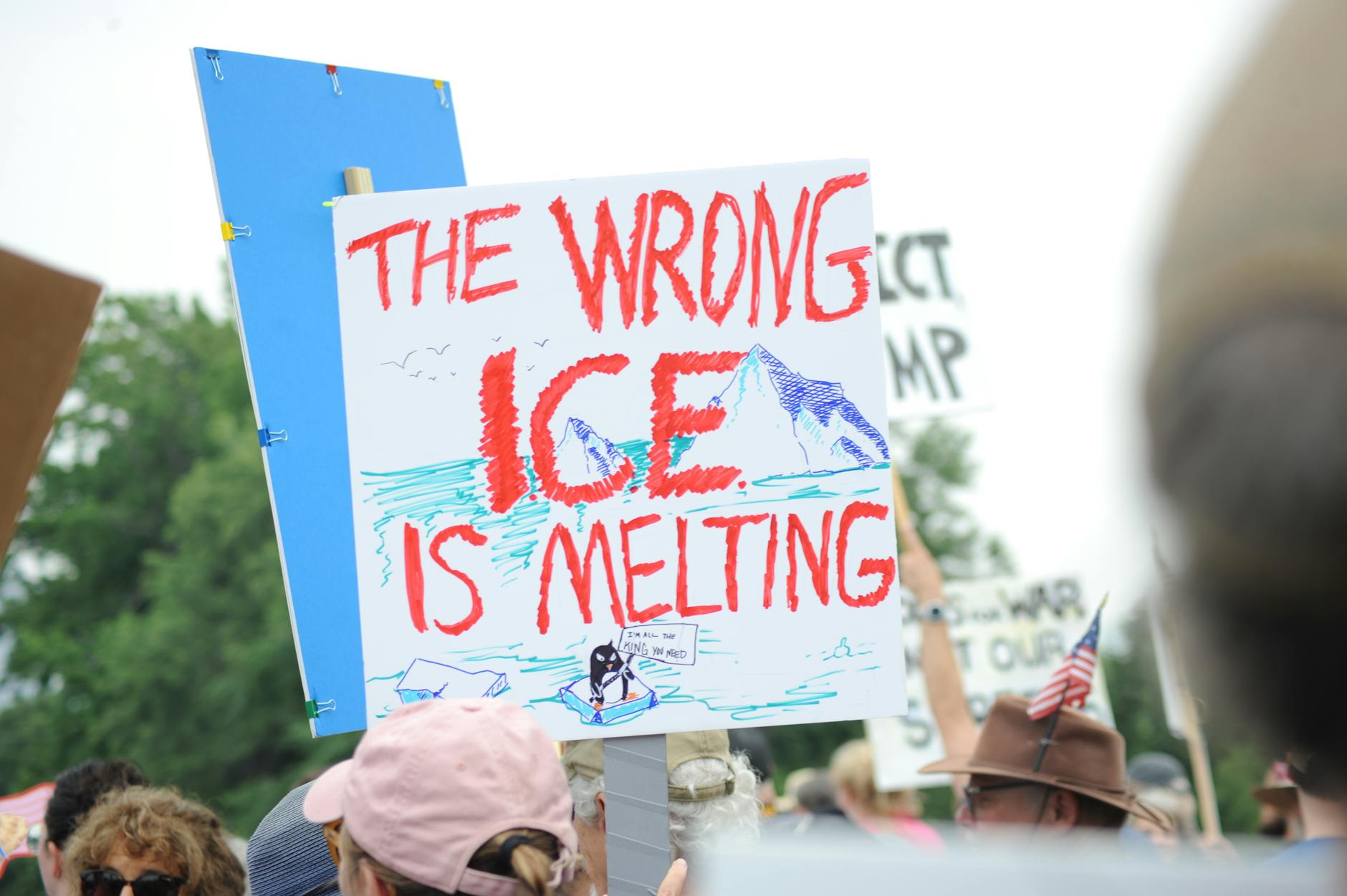
    Enter the Trump regime deploying thousands of federal immigration officers into my city, my home. There are currently over 3,000 federal immigration officers in the state of Minnesota causing immediate destabilization across the state in one of the largest immigration operations in the history of the country.

    The administration claims that they’re here to protect the country from the worst of the worst undocumented violent criminals, but in just one year, ICE detention numbers have nearly quadrupled, with those detained with no criminal record rising from 6.4% to 43%. This publicly available data, data released by ICE itself, does not align with those claims.

    Add to this that ICE (Immigration and Customs Enforcement) and CBP (Customs and Border Protection) have been racially profiling individuals, harassing peaceful protesters, actions that resulted in the deaths of civilians. Citizen or not, this is not how things should be handled. We all deserve dignity and the right to live.

    The methods these immigration agents are using have gone so far that the city of Minneapolis is not charging people whose vehicles have been abandoned due to ICE detention. ICE and CBP have been taking people into custody without first verifying identity, according to legal observers and civil rights organizations.

    These federal immigration agents are not making our country safer. Their operations have actually made communities less safe. There have been hundreds of reported allegations of sexual abuse in ICE detention facilities, with some cases resulting in criminal charges against officers. There have also been years of documented reports of violence at the hands of ICE agents with little accountability.

    Attorney general Pam Bondi recently sent a letter to Minnesota governor Tim Walz. The letter is basically a list of demands. Give over Minnesota’s records on Medicaid and Food and Nutrition Service programs, repeal sanctuary policies, and hand over access to Minnesota’s voter rolls to the Department of Justice. These seem less like steps towards lowering violence from illegal immigrants and more like a way to extend and consolidate power.

    Who we lost

    Renee Good

    On January 7th, 2026, Renee Good was shot and killed by a federal immigration officer as she was trying to follow the commands of other officers to leave the area. On her Instagram account she described herself as a poet, writer, wife, mom and shitty guitar strummer. She was just a regular person.

    Federal officials claim that she was trying to use her vehicle as a weapon to run over an immigration officer, but many videos of the event show something completely different. They show two immigration agents attempting to open her car door without a warrant as she tries to drive away, her wheels facing away from all the agents.

    Alex Pretti

    On January 24th, 2026, just two and a half weeks after the death of Renee Good, Alex Pretti was shot and killed by a group of federal immigration agents who have not been identified yet. He was an intensive care nurse at the VA and a lover of the outdoors. He liked helping people and mountain biking and the people who knew him said he had a great sense of humor. He was just a regular person.

    The claim from federal officials is that he was armed and was planning to attack the immigration officers in the area. In multiple videos of the event we see that he was not armed with a gun, but with a phone, recording the events. According to the video, we can see he was helping two women who had been pushed by the agents before being pepper sprayed, thrown to the ground, beaten and shot. He was carrying a firearm, but he never used it and the video shows that another agent had taken it from his holster prior to any of the shots being fired.

    What it did

    The city has been mourning ever since. Two people were killed without justification. The statements from the federal government don’t align with the evidence. The city is hurt and angry. We have lost two neighbors, and countless others have been taken and displaced. We don’t know who we will lose next.

    As a Puerto Rican, I’ve had US citizenship since birth. I’m also a disabled veteran, having raised my hand and sworn to protect my country in the line of duty. I am still not safe, not because I’m not a citizen, but because I’m brown. Based on the evidence I’ve seen, how should I feel safe in the knowledge that I’m a citizen if that hasn’t seemed to stop immigration officers from killing citizens during their enforcement operations?

    Today I am looking at the fear I had a year ago materialized in front of me. As absurd and irrational as it may seem, it feels personal. We fled Texas to escape the reach of fascism, and fascism followed us here. As I write this, I hear sirens all around me. Has there been another murder? Is this one even more obvious than the last? What lies will they use to excuse what’s right in front of our eyes this time? Sometimes it gets hard to keep hope.

    The Response to the Violence

    And yet, even with everything happening, I feel safer here. Not because we are safe. We are far from being safe. I feel safer here because of the response I keep seeing to this violence. This city is unlike anywhere else I’ve lived. Yes, it’s been hard to make friends, but I have conversations with neighbors and strangers all the time, enough to remind me I’m not alone. Yes, it’s been hard to adapt to this new environment, but it’s been easier to feel at home here than anywhere else I’ve been (Puerto Rico excluded 🇵🇷).

    Everywhere I go, I see people with “ICE OUT” signs and unflinching faces. Strangers coming together to fight for the rights and lives of other strangers they will never meet. The level of organization, planning, and hard work I keep seeing continues to blow me away. Regular people serving as community observers to make sure there is someone present to document what’s happening. Mutual aid networks around the cities to help those in need. People showing up to protests for those that can’t join for fear of being abducted.

    I’m proud to be here. I’m proud to go out and look after my neighbors. I’m proud to join in protests alongside strangers who, for a brief moment, become my brothers and sisters.

    The unity, love and passion in this city are infectious. Family has asked me if I have considered leaving the state for a while, but I’ve never had a doubt that this is where I want to be. I want to live in anger against the oppression we are experiencing alongside all of my neighbors in Minnesota.

    Where Do I Go from Here?

    Sometimes knowing that something is going to happen doesn’t take away any of the shock of it actually happening. We all know we’re going to die, but seeing a loved one or ourselves at that stage will never be easy. I feel that for this country right now. Is it dying? Will we get past this one day? I don’t know.

    What I do know is that I reject everything that is happening and I reject being part of its normalization. I’ve known this day would come since before Trump’s first day in office the first time, and I don’t plan on stopping or slowing down now. I will continue to speak out against the violence and oppression we are experiencing, and I will continue to stand unwavering in my commitment to the community surrounding me and beyond. I have the best example to follow in all of the brave Minnesotans fighting for a better future right now.

    We left Texas in search of a better home, and what we found was not safety in the way I expected. We found responsibility and commitment. We found neighbors who refuse to look away. We found a place that does not pretend violence is normal or acceptable, and that alone has made all the difference.

    I don’t know what the future holds, what will happen to this country or to us, but I do know that wherever we are, we will stand with the people who fight for dignity, justice and community. I can already see visions of a better future here.

  • Living With Our Monsters: Personal Reflections on Grief Through ‘The Babadook’ and ‘Next to Normal’

    Spoilers for the horror film The Babadook and the musical Next to Normal.


    The Babadook and Next to Normal

    I recently watched the pro-shot recording of the musical Next to Normal (2025) that premiered on PBS. I went into it blind, having not seen the musical before and having no prior knowledge of its themes or what the story was about. I was in awe of the work of art I experienced. Everything from the songs and music to the performances and production flowed beautifully and powerfully. The musical deals with themes of mental illness, loss, and grief, and how these can affect a family if not addressed.

    After watching the musical, I couldn’t help but be reminded of the film The Babadook and think about all the similarities between the two. Both stories are very different from each other, and are also told in different ways (one being a musical and the other a monster/psychological horror movie), but they both deal with grief and mental illness in a family that is being destroyed by the loss of a family member and both deal with the ramifications of not addressing this loss and how it can build to be an oppressive presence that gets in the way of their lives, sometimes violently.

    The Babadook has been one of my favorite movies since the moment it came out in 2014, and my love for it has only increased through the years. It has helped me deal with my own experiences of loss and has given me an avenue to experience and make some sense of it all. I don’t have much knowledge about the musical Next to Normal, but seeing the similarities, I can see how it can also help someone navigate the aftershocks of loss.

    My Personal Journey

    I made a friend after high school that quickly became my best friend. We had both just graduated and were far away from our families for the first time and during this time we dealt with similar experiences: isolation, feelings of imprisonment, feelings of failure, loss of identity (religious/political deconstruction), which, at least to me, all lead to a a lot of confusion and a deep depression. During this time, the only one that knew that all these things were happening to me, was my new friend. With him also going through similar circumstances, we bonded deeply through our mutual support of each other. I genuinely don’t know how well I would’ve come out of all of it without him.

    Two years after my friend and I had met, I moved across the country back with my family, and a month after that, my friend died in a vehicular accident coming home from work. The pain today feels just as strong as it did then, and the hole and loneliness it left are still there. I lost my best friend, and the only person I could talk to about those specific experiences we went through. Now those memories are only mine and the feeling that no one else will truly be able to see or know is haunting.

    Fast forward four years. My dad and I went on a trip for a month, just the two of us. We had a month of bonding, of getting to know each other better, of working together and more. I remember visiting restaurants, going to the movies, and learning about this new place we were visiting. I didn’t grow up with my father, only visiting him every other weekend growing up or during the summers once he moved away, and this trip made me feel more connected to him.

    One night, as we were nearing the end of this trip, we were heading back to the place we were staying and a drunk driver ran the light and collided with out car. It was a very traumatic event for me. We were now trapped inside a card in the dark and my dad had lost consciousness. He didn’t gain back consciousness for almost a week, but I was conscious the entire time and I remember everything about it. The smells, the blood, the pain. I though I was going to lose my father, but I didn’t, and I’m happy to say he is alive and well, but the trip we went on together slipped from his mind. He experienced some memory loss from the accident and that month prior to the accident was lost and has never come back.

    This to me feels like another form of loss. I didn’t lose my father, but I lost the connection we built and the memories we made. I feel alone all over again, with no one to share the trauma of the car accident, pulling him out of the car, the fear in the moment that he might die, and the month that came before it. Now those memories are only mine, again.

    These personal losses have linked themselves to these works of art, and now I find myself searching for new ways to understand my own grief.

    Making Sense of Loss

    Both in The Babadook and Next to Normal, things aren’t just magically fixed at the end. They don’t have happy endings, and that makes sense. Both deal with heavy themes and families in extreme circumstances and it’s hard to find anything happy about losing someone close to you, someone you love. What they both offer is a bittersweet ending and the promise that there’s still hope on the other side.

    The ending of The Babadook has always been intriguing to me because the family is not rid of the monster. In fact, they have the monster living in the basement of their home, because the monster was never a monster. Throughout the movie, The Babadook was and has always been an embodiment of that loss in the family. In Next to Normal, it is Gabe. The depression, the anger, and the grief, that is all the monster and Gabe truly are, so the families cannot get rid of them the same way I can’t get rid of my own memories. They live with us.

    And this is where I find the light at the end of the tunnel. It may seem terrifying, the thought that the loss will never go away, but in order to fix a problem, we must know what the problem is in the first place. I have gone to counseling, talked with friends and family, and will probably continue to do so because that is how I battle and cope with it.

    In The Babadook, the family feeds the monster in their basement, not to make it stronger, but to appease it and find some peace within themselves too. In Next to Normal, the family decides to make hard decisions: the parents split and the father decides to go to therapy. That is how they battle and find peace. In my own life, I have found peace and light in knowing that these monsters will stay with me, and that all I need to do is figure out how to properly feed them and find peace for myself.

    Processing Grief Through Creativity

    It’s difficult dealing with heavy emotions head-on, to stare at the monster in the face. Sometimes it’s easier to approach grief indirectly, and art offers a powerful avenue for that journey. Art creates a safe distance, a buffer that allows us to examine our pain through metaphor, narrative, and emotional resonance without being consumed by it. Both The Babadook and Next to Normal provide this buffer, allowing audiences to witness the twisted and terrifying forms of grief while maintaining enough separation to process it safely.

    What makes these works so effective is how they refuse to offer easy solutions. Instead, they acknowledge that grief becomes part of us, something we learn to live with rather than overcome. In the end of The Babadook, with the mother feeding the monster in the basement, I felt a profound sense of recognition. That’s exactly what writing, talking, and creating about my grief has been. Bringing food to the grief, acknowledging it, giving it space to exist without letting it take over my life.

    In writing this post, I’m engaging in the same ritual yet again, feeding my own monsters through creativity. Putting these experiences into words allows me to examine them from different angles and to make sense of them. By connecting my personal story to these artistic works, I’m not just processing my grief, I’m transforming it into something that might help others name their own monsters.

    Perhaps that’s the most powerful aspect of pressing grief through creativity: it transforms isolation into connection. My memories of my friend and the lost time with my father may be mine alone, but in sharing them through writing, they become part of a larger conversation about loss. Like these works of art that touched me, maybe my words can offer someone else that moment of recognition, and the comforting realization that we’re not alone in learning to live with our monsters.

  • Journeying into Blogland

    There’s something so innately human about wanting to share our experiences with one another. We seek individuality and self-expression while also seeking community and audience. From cave paintings to cinematic blockbusters, we yearn to share a piece of ourselves with one another.

    Photo by Christin Hume on Unsplash

    I have wanted to express myself through writing for most of my life and have made many attempts at it. I’ve delved into poetry, storytelling, both short stories and longer pieces, journaling, and many other things but have always stopped for one reason or another. This is yet another attempt at continuing that journey, although one that I hope sticks. This entry is mainly for me to look back at and see where my mind was at the time, establish some goals and set expectations for I want this project to be.

    So why blogging? In retrospect, I think the reason my other attempts didn’t work before was because I felt limited by the medium (pun intended) I was using. Poetry is great, but am I only a poet? Too limiting. Another reason I think those failed is because I suffer from getting-bored-and-wanting-to-try-new-things and would move one to something else before I fully explored the format. Still, blogging has been a thing I have always stayed away from. A story or a poem can be self-contained, there doesn’t need to be a sequel for it to work as a story or poem, but is a blog with only one entry even a blog? The commitment to something that would require me to come back, revisit and add to it always scared me off, but I’m older now (even if not any wiser), and I think that might be exactly what I’m looking for.

    I don’t expect anyone to read any of my posts, or at least that’s the mentality I have coming into this. It seems paradoxical to me to go through the effort of creating and editing a piece of writing, publish it for others to see, and claim that no audience is needed. Why choose this format if it’s not for others’ consumption but my own? The reason I’m intrigued by the format of blogging and sharing it publicly is the commitment I would have run from in the past. I want to express myself, and hopefully improve my writing and communication skills in the process. This seems to be a great way to push myself to do that. My hypothesis is that a good balance between the structure of a blog format, the freedom to talk about anything, and a healthy appetite of curiosity is exactly what I need to improve and finally stick to a consistent writing pattern.

    So what am I going to write about? Honestly, I still don’t know yet. I have too many interests to choose just one, and I’m adding things to that list constantly. I hope to write about anything that I’m curious about at the moment, whether it be history, technology, art, “insert your favorite topic,” etc. I want this to be a place where I can deep-dive into random topics, process through thoughts and ideas, and learn along the way.

    In conclusion, I want to develop a new habit of writing that promotes an active attitude towards learning and researching. I am an expert at nothing, but am curious about pretty much everything. We have the world’s information at our fingertips and I want to do my best at learning as much as I can while documenting my journey.

    If you’ve read this far, thank you. Stick around and I might surprise you with my positive attitude towards public transportation and my negative attitude towards Norman doors.